
The Supreme Court could provide officials in sanctuary cities yet another legal boost in their fights over Trump’s immigration crackdowns if it rules in favor of New Jersey’s gambling effort, said Ilya Somin, a George Mason University law professor who has argued that Trump’s order is unconstitutional. In the aftermath of the US Supreme Court ruling in favor of sports betting legislation in individual states at the end of May 2018, online gambling is once again the talk of the town. Estimates are we won't see any actual gambling expansions or concrete steps taken to make it a reality before 2020. WASHINGTON — The Supreme Court struck down a 1992 federal law on Monday that effectively banned commercial sports betting in most states, opening the door to legalizing the estimated $150 billion. Six months after the Supreme Court reversal, Pennsylvania took its first legal sports bet at a casino sportsbook in 2018. Additional licenses have since been handed out and mobile/online wagering. Supreme Court ruled in favor of New Jersey, which had challenged the Professional and Amateur Sports Protection Act (PASPA), a law enacted in 1992 that confined sports betting to Nevada.
- Online Gambling Us Supreme Court Cases
- Online Gambling Us Supreme Court Case
- Us Supreme Court Reverses Online Gambling
- Online Gambling Us Supreme Court Forms
Sports Betting USA is now the place to start preparing for regulated online betting.
In what amounted to a stunning late turn of events, the Supreme Court agreed to hear New Jersey’s arguments in a sports betting case that has been raging across years of bitter Garden State opposition to the Professional and Amateur Professional Sports Act (PASPA).
The Conference
Scheduled for November 14-15 in New York City, Sports Betting USA conference will provide a forum for professional sports leagues and team owners to review their new wealth of potential options.
Supreme’s Surprise Reversal
The Supreme Court rebuked the U.S. Solicitor General’s recommendation not to consider the case, paving the way for renewed optimism from sports betting advocates to spur the sports industry to review its options in the vent of a New Jersey win.
Timing Couldn’t Be Better
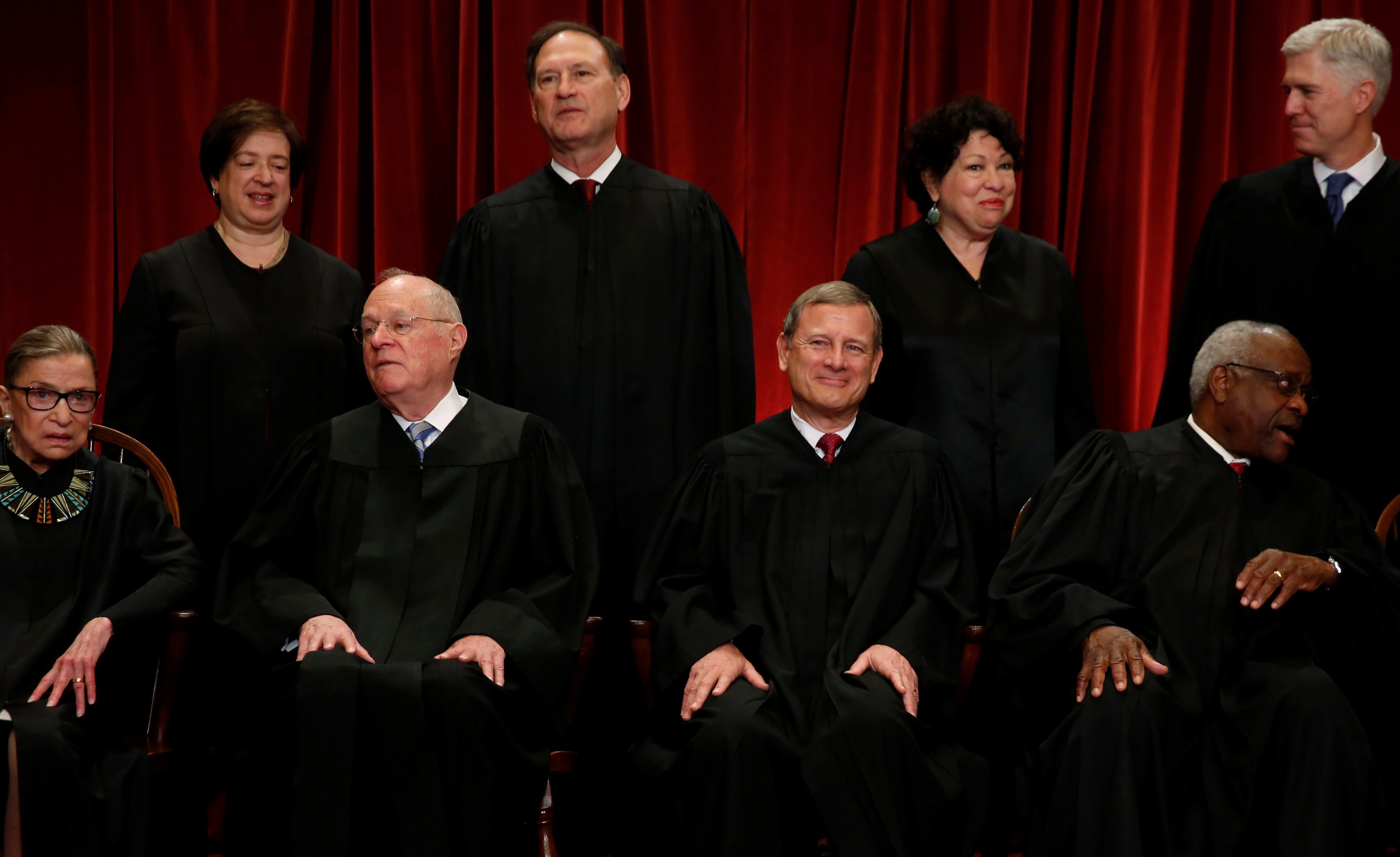
With Sports Betting USA announced over a month ago, the dates now become the perfect time and place for sports owners to address all questions about the integrity of sports and doubts about sports betting with should the federal Supreme Court overturn PASPA NS allow legal decisions on sports betting to fall to individual state governments.
Expert Speakers
Among experts confirmed for Sports Betting USA 2017 are UK Gambling Commission Executive Director Nick Tofiluk; Nevada Gaming Control Chief of Enforcement Karl Bennison; ESPN’s NFL Business Analyst Andrew Brandt; and Nielsen Sports Senior Vice President Stephen Master.
Online Gambling Us Supreme Court Cases
Calling It
One speaker at the conference was not surprised, but prepared, calling the stakes “increased” at this year’s Sports Betting USA conference. Having successfully predicted the Supreme Court’s action, Daniel Wallach asserted that the conference “couldn’t be happening at a better time as the leagues...now have to quickly map out a strategy that will allow them to come out of this battle with a win.”
Outlook
Online Gambling Us Supreme Court Case
In terms of iGaming legislation, the Supreme Court’s break with federal policy to hear New Jersey’s arguments looks like the biggest victory of all. No matter what the arguments are, the federal courts are listening.

See also
Online Poker Under Attack in US Court Decision
Court Upholds US Ban on Online Gambling
After the New York Sports Betting USA and Investor Summit Success, Eyes Now Turn to New Orleans
Critical Days at US Court
Michigan Online Sports Betting Pushed Off Until 2021
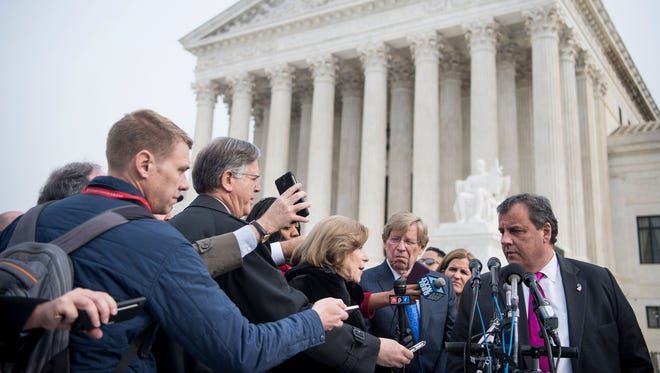
In September, 2012, we blogged about the federal district court ruling in United States v. DiCristina. (See Federal Judge Rules “Texas Hold‘em” is Game of Skill, Not “Gambling” Under Illegal Gambling Business Act). The case involves a defendant arrested and charged with violating the federal Illegal Gambling Business Act (“IGBA”) for running a game of Texas Hold’em in the back of a warehouse located on Staten Island. The defendant was found guilty of violating the federal law, but the judge issued a post-verdict judgment of acquittal “[b]ecause the poker played on the defendant’s premises is not predominately a game of chance, it is not gambling as defined by the IGBA. That the statute was targeted at limiting the influence of organized crime, and organized crime groups have operated poker games beginning in the years since its passage, does not retroactively change the statute’s scope.”
However, as we told you in August 2013, a federal appeals court reversed the decision and reinstated the judgment of conviction against the defendant. (See Federal Appeals Court Reverses the DiCristina Verdict and Finds that Poker Violates the IGBA). The court ruled that the definition of “gambling” is not at issue in a criminal action brought under the IGBA. Instead, the court held, “[t]he relevant definition for our purposes is that of an ‘illegal gambling business,’ provided for in 18 U.S.C. § 1955(b)(1), not the definition of ‘gambling’ provided for in § 1955(b)(2).” The defendant appealed this decision to the United States Supreme Court (See Will the Supreme Court Chime in on the Legality of Poker?).
On February 24, 2014, the Supreme Court declined to hear the appeal.
Us Supreme Court Reverses Online Gambling
Impact of Supreme Court Decision
The Supreme Court summarily declined to hear DiCristina’s appeal without issuing an opinion. Although it is difficult to speculate, the federal appellate court’s decision reinstating the conviction is in accord with numerous federal courts that have rejected the “gambling is a game of skill” argument. Accordingly, with a lack of a “circuit split” on the question, the Supreme Court likely found no reason to hear the appeal.
Additionally, as we have previously noted, there are a number of bills pending before the United States Congress that may redefine “gambling” under federal law. (See Newest Federal Online Poker Bill Includes Mandatory Tax). Most pending federal gambling legislation is limited to online gambling. As such, the Supreme Court must be aware of the interest in online poker legislation and simply may have opted to allow Congress to decide whether to legalize online poker.
Online Gambling Us Supreme Court Forms
Takeaway and the Effect on Internet Poker
The Supreme Court’s decision regarding DiCristina’s appeal is unlikely to affect the continuing efforts at both the federal and state level to legalize, regulate and tax online poker and other casino games. Please note that IGBA should not affect the bills that are presently being considered by Congress.
If you are interested in learning more about this topic or pursuing licensure on a state level, please e-mail us at info@kleinmoynihan.com, or call us at (212) 246-0900.
The material contained herein is provided for informational purposes only and is not legal advice, nor is it a substitute for obtaining legal advice from an attorney. Each situation is unique, and you should not act or rely on any information contained herein without seeking the advice of an experienced attorney.
Attorney Advertising